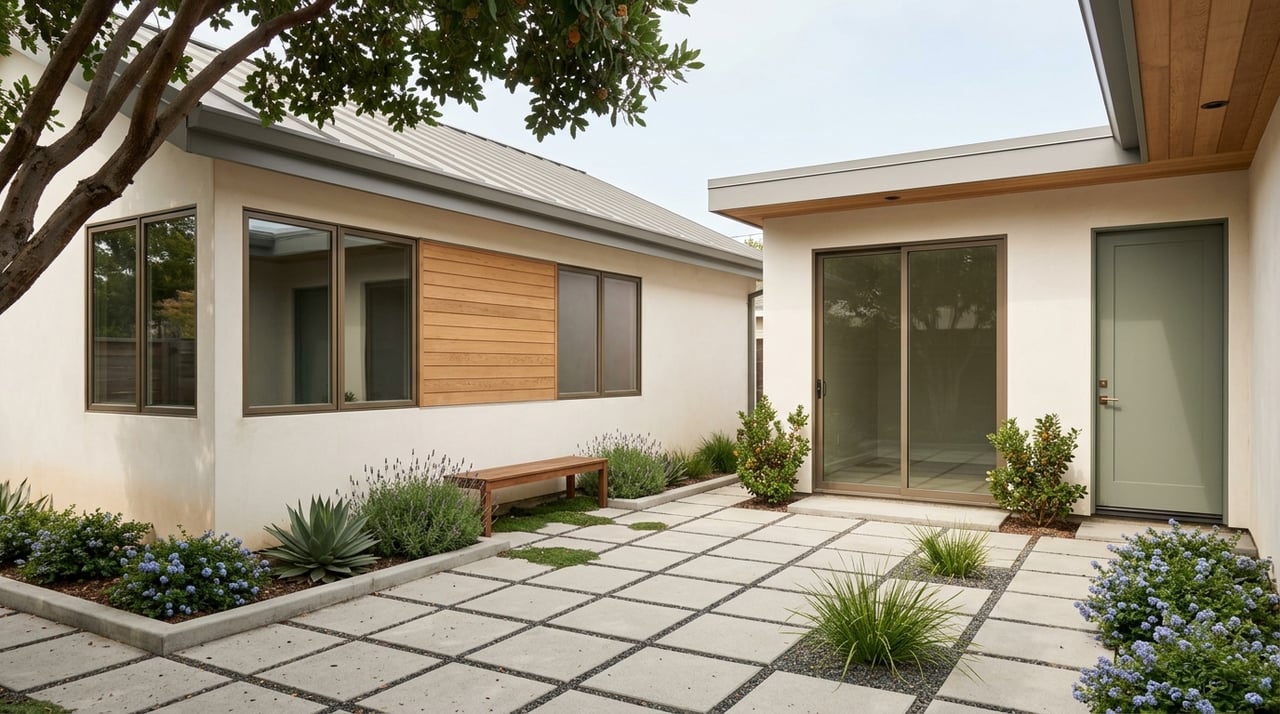
Redwood City ADU Investment, Duplexes and Long-Term Value
April 16, 2026
April 16, 2026
Thinking about how to make a Redwood City home work harder for you long term? In a market where public data shows home prices around the high-$1.7M to mid-$1.9M range and median rent around $3.4K per month, an ADU or duplex setup can change the math in a meaningful way. If you want more flexibility for housing costs, multigenerational living, or future resale appeal, Redwood City offers more options than many buyers realize. Let’s dive in.
In Redwood City, small-scale housing is not just a niche idea. The city has actively focused on "missing middle" housing, including duplexes, triplexes, and fourplexes, especially in older areas near transit, while also identifying practical barriers like lot size, parking, lot width, and open space. You can explore that local framework on the city’s missing middle housing page.
That matters because long-term value is often tied to flexibility. A property that can support a second unit may give you more options to offset carrying costs, house extended family, or appeal to future buyers who want similar versatility.
Redwood City remains a high-cost market, which is exactly why second-unit potential gets so much attention. Public snapshots show a median listing price of about $1,799,500, while Redfin reported a February 2026 median sale price of $1.8M and Zillow reported a January 2026 median sale price of $1,947,500. The citywide median rent listed by Realtor.com is about $3.4K per month, according to the Redwood City market overview.
Those numbers are useful for context, but they should not be treated as a one-size-fits-all rule. If you are evaluating an ADU, duplex, or lot with future second-unit potential, live comps, current rent comparisons, and the exact zoning of the property matter more than any citywide average.
Redwood City defines an ADU as a smaller unit with its own kitchen and bathroom. The city also states that new ADUs cannot be used exclusively as short-term rentals, which makes the value story more about stable long-term housing than vacation-style income. You can review the city’s ADU rules on the official Accessory Dwelling Units page.
On a single-family lot, Redwood City allows one ADU plus one JADU. A JADU, or junior accessory dwelling unit, can be up to 500 square feet of converted space within the primary home.
For detached ADUs, a one-bedroom unit can be up to 850 square feet, and larger ADUs can be up to 1,000 square feet. The city also notes 4-foot side and rear setbacks for detached ADUs.
On multifamily lots, the rules can also create opportunities. Redwood City says conversions of uninhabited space can allow at least one ADU or up to 25 percent of the existing unit count, and it also allows up to two detached ADUs.
ADUs can add flexibility, but they are not a shortcut. Redwood City lists base fee estimates of roughly $3,823.64 to $5,087.67 for new ADUs before additional valuation-based and other fees, based on the city’s ADU guidance.
The city says applications are submitted through eTrakit, detached ADUs require a fire-flow test, and a local pre-reviewed plan program is intended to reduce review time to 30 days. Redwood City is also partnering with HEART of San Mateo County on free pre-reviewed ADU plans, which may help reduce early planning friction for some homeowners.
That does not mean every property is equally easy to develop. Site layout, utility access, lot coverage, and construction cost still matter, so the smartest first step is always to evaluate the specific parcel before you build your budget around projected rent.
If you are looking beyond ADUs, duplexes deserve a close look. Redwood City’s current codified R-2 article is the duplex district, with standards that include a 5,000-square-foot minimum lot size, 35 feet of frontage, and a 50-foot minimum average lot width, according to the city’s zoning code.
Those lot standards help explain why feasibility can vary so much from one street to the next. A property that looks similar from the curb may have very different development potential once you account for zoning district, lot dimensions, parking layout, and the placement of the existing home.
Redwood City has also moved toward more permissive small-unit housing standards. The city completed zoning amendments that reduced minimum lot requirements for multifamily residential, lowered multifamily parking to one space per unit, removed guest parking, and allowed parking in front or side setbacks, as outlined in this city housing document.
For buyers, that is important because older assumptions about Bay Area zoning do not always reflect the current rules on the ground.
Some Redwood City properties may also have an SB 9 path. City staff describes SB 9 as allowing ministerial approval of up to two dwelling units on single-family zoned lots, and the local urban lot split ordinance applies to RH and R-1 parcels, with resulting lots limited to residential use and long-term rentals rather than short-term rentals. The city’s staff report provides that framework here.
In plain English, a single-family lot may have more than one route to added value. But the right path depends on zoning, lot conditions, and state-law exclusions, so this is never something to assume from an online listing alone.
The strongest case for an ADU or duplex in Redwood City is not usually flashy income projections. It is optionality.
You might live in the main home and rent the ADU on a long-term basis. You might buy a duplex and use rental income to offset monthly ownership costs. Or you might create space for multigenerational living today while keeping resale flexibility for the future.
That is especially relevant in Redwood City, where local policy is oriented toward long-term housing rather than short-term rental use. A property with a legal second-unit path can serve different life stages without requiring you to move every time your needs change.
One of the biggest mistakes buyers make is treating Redwood City as a single pricing bucket. Public data from Realtor.com shows meaningful variation by ZIP code, which can affect both purchase price and rental upside.
For example, Realtor.com shows:
You can find those figures within the broader Redwood City overview. The takeaway is simple: second-unit upside is highly local. The best fit may not be the most expensive area, and the cheapest entry point is not automatically the strongest long-term play.
When you look at a Redwood City home with ADU or duplex potential, try to review it in this order:
Zoning first
Confirm whether the property is in R-1, RH, R-2, or another district and whether ADU, duplex, or SB 9 paths may apply.
Lot dimensions next
Check lot size, width, frontage, setbacks, and where the existing improvements sit on the parcel.
Parking and access
Redwood City has become more flexible, but access and parking layout can still affect what is practical.
Use case before income
Decide whether you want rental income, guest space, multigenerational housing, or resale flexibility. The right property depends on your goal.
Run live comps and rent comps
Citywide medians are only the starting point. Current neighborhood sales and current rental competition are far more useful.
Verify process and costs
Permit fees, construction estimates, timelines, and fire-flow or utility requirements can change the real return.
If you prefer an existing income-style setup over future construction, Redwood City does have a small multifamily submarket. Redfin shows 11 multi-family homes for sale in Redwood City with a median listing price of $1.82M on its multi-family search page.
That is a limited inventory pool, but it shows duplexes and similar properties are not just theoretical. In the right situation, buying an existing two-unit property may be more predictable than purchasing a single-family home and planning to build later.
If you are a buyer, the opportunity is often in finding a property where the second-unit story is clearer than the market realizes. That could mean an existing ADU, a duplex, or a lot with realistic future potential based on current rules.
If you are a seller, legal second-unit features can broaden your audience. Buyers may see value in rental offset, flexible living arrangements, or future use options, especially in a high-cost Peninsula market.
The key in both cases is careful positioning. Not every extra structure is a legal ADU, not every lot supports a duplex path, and not every public rent estimate matches what a specific unit can command today.
If you are weighing a Redwood City purchase or sale and want to understand how ADU or duplex potential may affect value, strategy, and resale, connecting with a local team can save you time and costly assumptions. Reach out to Gianna Archini for thoughtful, Peninsula-focused guidance tailored to your goals.
Get assistance in determining current property value, crafting a competitive offer, writing and negotiating a contract, and much more. Contact us today.